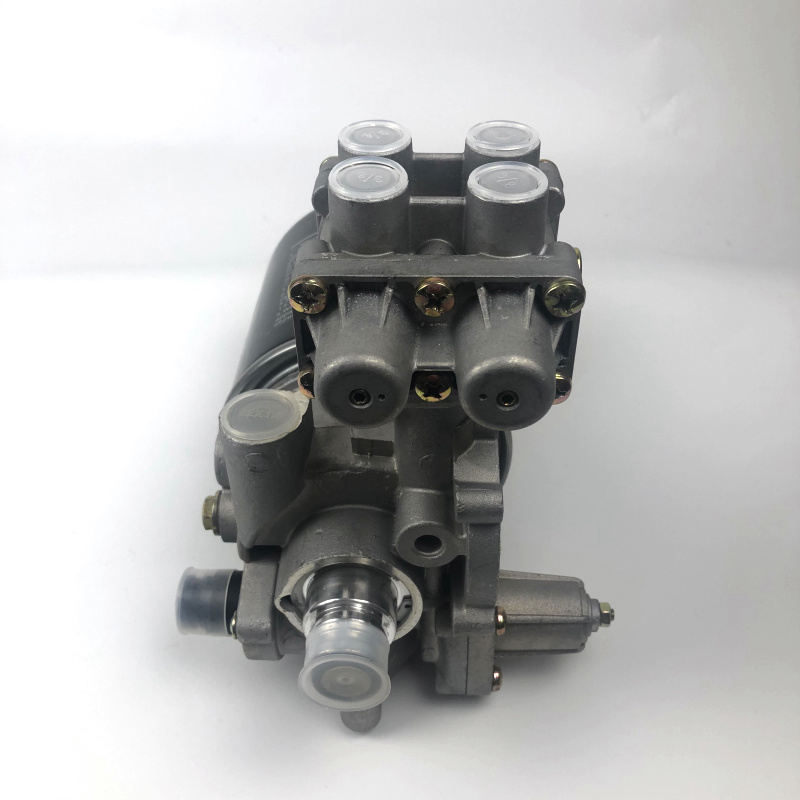
Selection of Experimental Methods for Structural Strength Verification of Mechanical Valves
As an important part of industrial automation equipment, the structural strength of the mechanical valve directly affects the reliability and safety of the equipment. In practical applications, the structural strength verification of the mechanical valve is an indispensable link. The selection of experimental methods is the key to ensuring the effectiveness of the structural strength verification of the mechanical valve. This paper will discuss several commonly used experimental methods for the structural strength verification of mechanical valves, and analyze their applicability and limitations.
One, static tests
Static tests are one of the most commonly used methods for structural strength verification of mechanical valves, mainly through simulating static stresses and strains under working conditions to test the structural strength of the mechanical valve. Common static tests include static pressure tests, static torsion tests, and static load tests, among others. Static pressure tests are mainly used to detect the ability of the mechanical valve to bear pressure when stationary, while static torsion tests are used to detect the structural strength of the valve body under torque. Static load tests are used to detect the structural strength of the valve body under heavy loads. Static tests have the advantages of simple operation, low cost, and ease of implementation, but they can only simulate static stresses and strains and cannot simulate dynamic stresses and strains. Therefore, for mechanical valves sensitive to dynamic stresses and strains, the verification effect of static tests may not be ideal.
Two, dynamic tests
Dynamic tests simulate the dynamic stresses and strains that the mechanical valve undergoes during operation to verify its structural strength. Common dynamic tests include fatigue tests, impact tests, and vibration tests, among others. Fatigue tests are mainly used to detect the bearing capacity of the mechanical valve under repeated stresses, while impact tests are used to detect the structural strength of the mechanical valve under instantaneous impact stresses. Vibration tests are used to detect the structural strength of the mechanical valve under vibration stresses. Dynamic tests can more accurately simulate the stress state of the mechanical valve in actual work, so for mechanical valves sensitive to dynamic stresses and strains, the verification effect of dynamic tests is more ideal. However, dynamic tests are complex in equipment, expensive, difficult to operate, and require a long test time.
Three, finite element analysis
Finite element analysis is a method based on numerical simulation, which uses computer software to perform numerical calculations by establishing a mathematical model of the mechanical valve to predict its structural strength under different stress states. Finite element analysis has the advantages of high calculation accuracy, wide simulation range, and low experimental cost, but it requires a large amount of calculation, professional knowledge, and certain experience is needed for the establishment and verification of the finite element model.
Four, actual operation monitoring
Actual operation monitoring is the process of monitoring the mechanical valve in its actual working environment to verify its structural strength. Actual operation monitoring has the advantages of high authenticity and reliability, but it requires long-term monitoring and is greatly affected by environmental factors, making it difficult to accurately evaluate the structural strength of the mechanical valve.
In summary, the selection of an appropriate experimental method for the structural strength verification of mechanical valves needs to be based on the specific conditions of the mechanical valve, considering factors such as the applicability, cost, difficulty, and reliability of the experimental methods. Static tests and dynamic tests are commonly used methods for the structural strength verification of mechanical valves, while finite element analysis and actual operation monitoring provide more accurate predictions and evaluations. In practical applications, various experimental methods should be comprehensively considered according to specific situations to ensure the effectiveness and reliability of the structural strength verification of mechanical valves.