
Flow feedback servo valve is a kind of hydraulic control element with high precision and quick response, which is widely used in industrial automation, aerospace, precision machinery and other fields. It realizes the accurate control of the flow through the feedback mechanism, thus ensuring the stability and accuracy of the system. In practical application, how to measure the flow feedback servo valve is the key link to ensure its performance and control accuracy.
First, the basic principle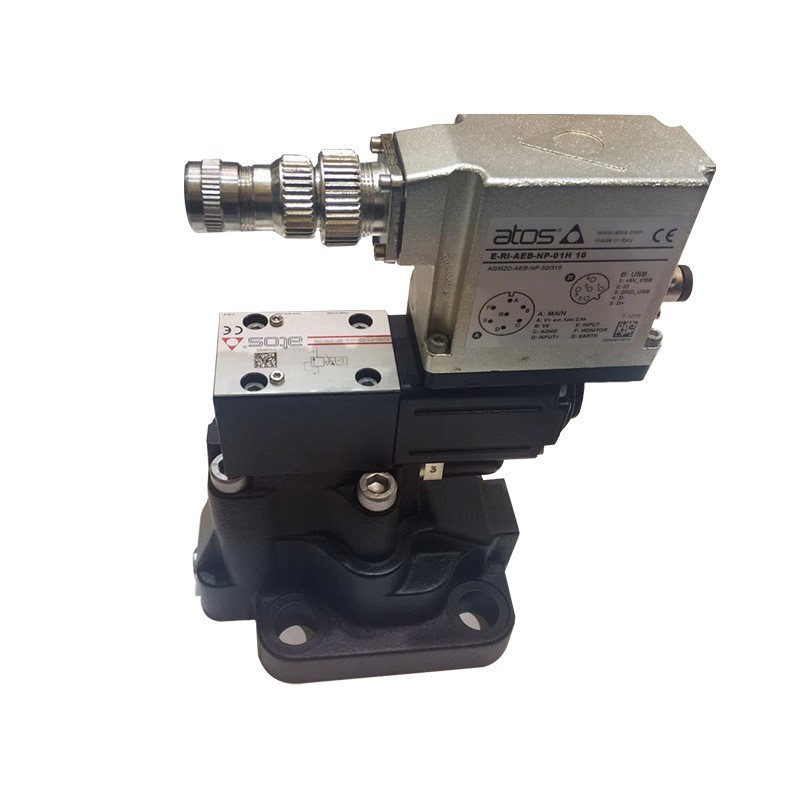 of flow feedback servo valve
Flow feedback servo valve usually consists of servo motor or torque motor, nozzle baffle mechanism, slide valve and feedback device. Its core working principle is: the valve core is driven to move by the input electrical signal, and the opening of the throttle is changed, so as to control the flow of hydraulic oil. At the same time, the flow sensor integrated in the valve detects the output flow in real time, and feeds back the signal to the controller, forming closed-loop control and realizing accurate adjustment of the flow.
Second, the metering mode of flow feedback servo valve
1. Direct flow measurement method
Direct flow measurement is the most intuitive measurement method, which is mainly installed at the outlet of servo valve through high-precision flowmeter (such as turbine flowmeter, positive displacement flowmeter or ultrasonic flowmeter) to record the passing hydraulic oil flow in real time. This method has high precision and is suitable for laboratory testing and performance evaluation, but it needs special measuring equipment and stable testing environment.
2. Differential pressure measurement
The differential pressure method is to calculate the flow rate by measuring the differential pressure before and after the valve port and combining with the throttling formula. This method is suitable for the case that the valve port structure is known, and the flow rate is estimated by Bernoulli equation or empirical formula. Although there is no need to install an additional flowmeter, it is highly dependent on the geometric parameters and fluid characteristics of the valve port and is easily affected by the pressure fluctuation of the system.
3. Feedback signal analysis method
Because of the built-in flow sensor in the flow feedback servo valve, the flow can be indirectly measured by reading its feedback signal. For example, current or voltage feedback signals are converted into corresponding flow values. This method is real-time and suitable for on-line monitoring and closed-loop control, but it needs to be calibrated in advance to ensure the accurate and reliable correspondence between the feedback signal and the actual flow.
III. Matters needing attention in measurement
Pay attention to the following points when measuring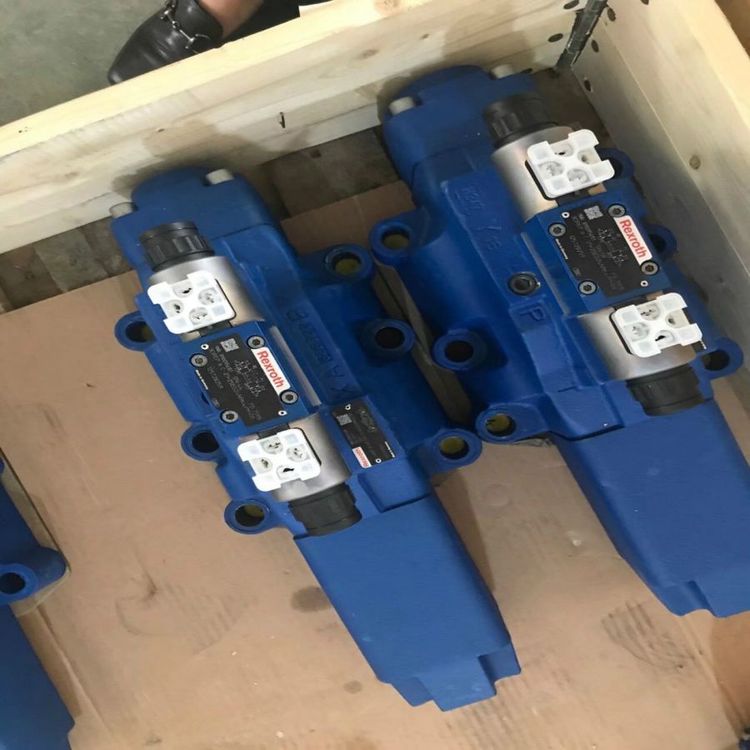 the flow feedback servo valve: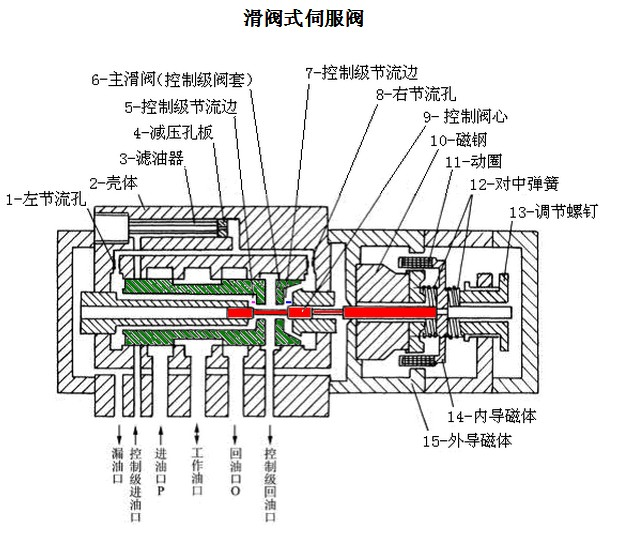
-System stability: ensure the pressure stability of the hydraulic system and avoid the influence of pressure fluctuation on the flow measurement accuracy.
-Temperature influence: The viscosity of hydraulic oil is greatly influenced by temperature, so the oil temperature should be controlled or compensated.
-Regular calibration: sensors and flowmeters should be calibrated regularly to ensure data accuracy.
-Environmental interference: electromagnetic interference, mechanical vibration and other factors may affect the collection of electrical signals, so shielding and isolation measures should be taken.
IV. Conclusion
To sum up, the measurement of flow feedback servo valve is an important link to ensure its control accuracy and system performance. According to the actual application requirements, direct measurement, differential pressure method or feedback signal analysis can be selected. No matter which method is adopted, attention should be paid to system stability, environmental control and equipment calibration in order to realize accurate measurement of flow. With the continuous development of sensing technology and control algorithm, the metering of future flow feedback servo valve will be more intelligent and efficient.