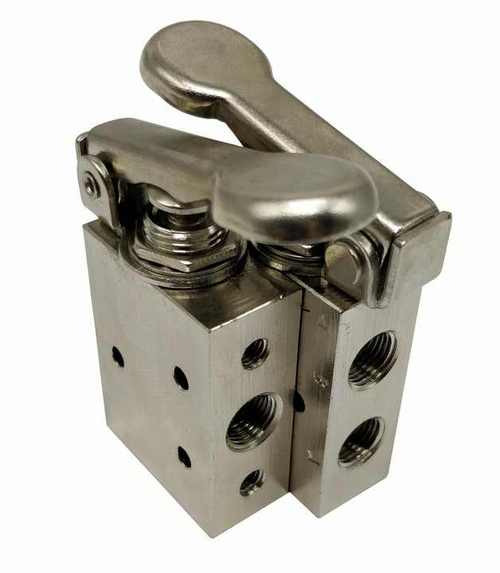
Optimization of die casting process parameters for mechanical valve die-cast aluminum parts
In the field of modern industry, die-cast aluminum parts are widely used in important industries such as automotive, electronics, medical, and aerospace due to their good thermal conductivity, corrosion resistance, high strength, and high toughness. As an important component, the performance of mechanical valves directly affects the operation of the entire mechanical system. Die casting process, as one of the main methods for manufacturing die-cast aluminum parts, focuses on optimizing process parameters to ensure the quality and performance of die-cast aluminum parts.
One, The Importance of Die Casting Process Parameters Optimization
Die casting process parameters include pressure, temperature, speed, time, cooling conditions, etc. The optimization of these parameters directly affects the performance and quality of castings. In the manufacturing process of mechanical valves, it is necessary to optimize process parameters to ensure key performance indicators such as dimensional accuracy, surface finish, mechanical properties, and corrosion resistance of the valve body.
Two, Analysis of Influencing Factors
Pressure: Pressure is one of the important factors determining the quality of castings. Excessive pressure may cause internal defects in castings, while insufficient pressure may result in inaccurate casting dimensions. Therefore, it is necessary to determine the appropriate pressure range through experiments.
Temperature: Temperature control is crucial during the die casting process. Too high temperature may lead to defects such as porosity and cold shuts in castings, while too low temperature is prone to cold cracks. Therefore, it is necessary to determine the appropriate temperature range through experiments.
Speed: Too fast die casting speed may lead to defects such as cold shuts and shrinkage holes in castings, while too slow speed may result in casting porosity. Therefore, it is necessary to determine the appropriate die casting speed through experiments.
Time: Too long a casting time may lead to defects such as cold cracks and shrinkage holes in castings, while too short a casting time may result in inaccurate casting dimensions. Therefore, it is necessary to determine the appropriate die casting time through experiments.
Cooling conditions: Cooling conditions include the flow rate of cooling water, the temperature of cooling water, cooling time, etc. Inappropriate cooling conditions may lead to defects such as cold cracks and shrinkage holes in castings. Therefore, it is necessary to determine the appropriate cooling conditions through experiments.
Three, Optimization Strategy
Experiment design: Through orthogonal experimental design, response surface method, and other experimental design methods, the die casting process parameters are optimized.
Data analysis: Through statistical analysis of experimental data using SPSS, MATLAB, and other data analysis software, the optimal process parameters are identified.
Process verification: After determining the optimal process parameters, process verification is carried out to ensure that they can operate stably in actual production.
Four, Conclusion
Optimizing the die casting process parameters is of great significance for improving the quality and performance of mechanical valve die-cast aluminum parts. Through experimental design, data analysis, and process verification, it is possible to effectively optimize the die casting process parameters, thus producing high-quality mechanical valve die-cast aluminum parts to meet the needs of modern industry.