
Interpretation of online fault early warning signals of mechanical valves
In the modern industrial field, as a key equipment for controlling fluid flow, the stable operation of the mechanical valve plays an important role in ensuring production safety, improving production efficiency, and reducing energy consumption. However, due to the complexity and variability of mechanical valves, their faults are often difficult to be discovered in the early stage, leading to unexpected shutdowns in the production process and equipment damage. Therefore, building an efficient online fault early warning system is particularly important. This article will discuss the interpretation of online fault early warning signals of mechanical valves, in order to provide a reference for industrial production.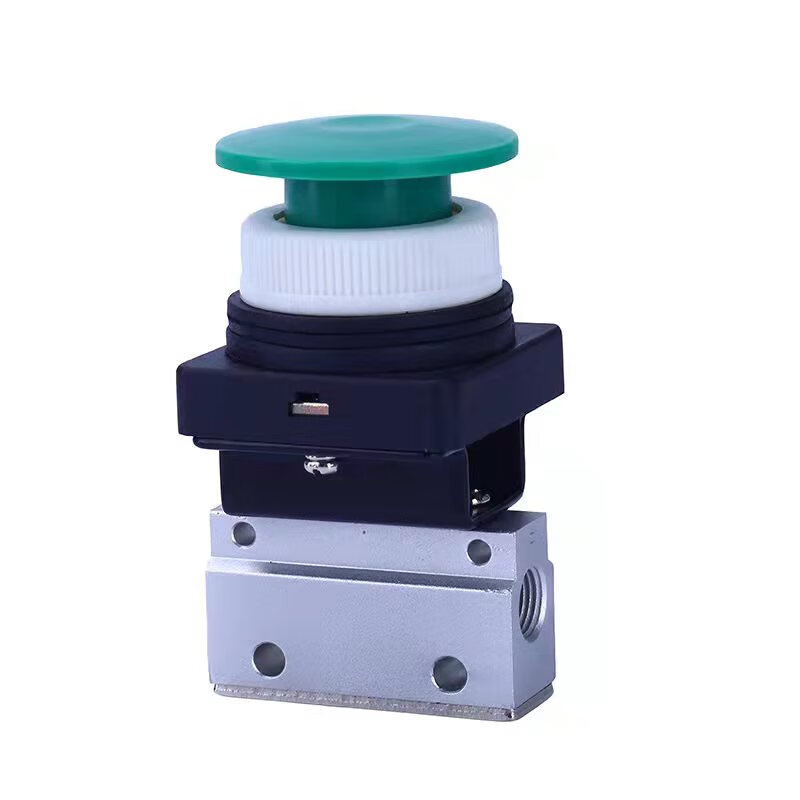
1. Types and interpretation of fault early warning signals
The early warning signals of mechanical valve faults are mainly divided into two categories: physical signals, such as changes in parameters such as pressure, temperature, and flow; and electronic signals, such as changes in electrical parameters such as voltage, current, and frequency. These signal changes are the direct manifestation of mechanical valve faults, and by interpreting these signals, faults can be detected in a timely manner and corresponding measures can be taken.
Pressure change: When a mechanical valve fails, the resistance of the internal fluid flow increases, causing the pressure to rise or fall abnormally. For example, when faults such as blockage inside the valve, wear of the valve core, or damage to the valve seat occur, they will cause pressure changes. When the pressure change exceeds the preset threshold, the system will issue an early warning signal to remind the operator to check and maintain.
Temperature change: During the operation of the mechanical valve, due to factors such as fluid flow and friction, the temperature may change. When the temperature increases or decreases abnormally, it may be due to reasons such as aging of the valve body material, damage to the sealing ring, or poor fit between the valve core and the valve seat. The early warning signal of temperature change can be an important basis for fault diagnosis.
Flow rate changes: When a mechanical valve fails, its ability to control fluid flow is affected, leading to abnormal flow rates. For example, when faults such as blockage inside the valve, wear of the valve core, or damage to the valve seat occur, they will cause changes in flow rate. When the changes in flow rate exceed the preset thresholds, the system will issue a warning signal to remind operators to check and maintain.
Voltage, current, and frequency changes: The changes in electrical parameters of mechanical valves during operation are also important signals for fault early warning. For example, when the power supply lines of mechanical valves have faults, electrical components age, or electrical connections are poor, the voltage, current, and frequency of electrical parameters will be abnormal. When the changes in electrical parameters exceed the preset thresholds, the system will issue a warning signal to remind operators to check and maintain.
Secondly, the handling and optimization of fault early warning signals
Real-time monitoring: When establishing an online fault early warning system for mechanical valves, the operation status should be monitored in real time, and changes in various parameters should be collected and analyzed to detect and handle faults in a timely manner. For example, when the changes in parameters such as pressure, temperature, and flow rate exceed the preset thresholds, the system should immediately issue a warning signal to remind operators to check and maintain.
Fault diagnosis: By analyzing the changes in various parameters during the operation of mechanical valves, faults can be initially diagnosed. For example, when the changes in parameters such as pressure, temperature, and flow rate exceed the preset thresholds, it can be preliminarily judged that the mechanical valve may have problems such as blockage, wear, and aging. By further analyzing the changes in electrical parameters, the fault type can be more accurately determined.
Fault prediction: By real-time monitoring and data analysis of the operation status of mechanical valves, potential future faults can be predicted. For example, when the trend of changes in parameters such as pressure, temperature, and flow rate continues to deteriorate, it can be predicted that the mechanical valve may experience serious faults. By predicting, measures can be taken in advance to prevent or minimize the impact of faults.
Fault handling: For faults that have already occurred, appropriate handling measures should be taken according to their type and severity. For example, when a mechanical valve is blocked, cleaning and unblocking methods can be used for treatment; when a mechanical valve is worn out or aged, new valves can be replaced or other maintenance measures can be taken. By handling faults in a timely manner, the impact of mechanical valve faults on production can be reduced, and production efficiency and equipment utilization can be improved.
Conclusion
The online fault early warning system for mechanical valves is an important means to ensure production safety, improve production efficiency, and reduce energy consumption. By real-time monitoring and data analysis of the operation status of mechanical valves, faults can be detected and handled in a timely manner, and potential future faults can be predicted, thereby improving equipment utilization and production efficiency. At the same time, by optimizing the structure and algorithms of the fault early warning system, its accuracy and reliability can be further improved, providing more reliable support for industrial production.