
The basic principle of lithography is to project the circuit pattern on the mask onto the silicon wafer coated with photoresist through a light source, and form a fine structure through exposure, development and other steps. However, in this process, how to accurately align the pattern on the mask with the existing layer on the silicon wafer is a major challenge in the lithography process. This requires a highly accurate nano-positioning system.
At present, extreme ultraviolet (EUV) lithography has become the first choice for process nodes below 7 nm. EUV lithography uses a light source with a wavelength of 13.5nm, which makes the exposure resolution reach a higher level. In order to match it, the positioning system in EUV mask aligner must have high accuracy and stability. This kind of system usually adopts multi-level positioning control, including coarse positioning, fine positioning and real-time feedback correction.
Specifically, mask aligner’s positioning system mainly depends on laser interferometer, encoder and high-precision motion platform. Laser interferometer can achieve sub-nanometer position measurement accuracy and is one of the most commonly used positioning methods at present. In addition, in order to deal with thermal drift and vibration during high-speed movement, advanced lithography equipment is also equipped with environmental control system and dynamic error compensation algorithm to ensure the repeatability and stability of positioning.
In chip manufacturing, the alignment error of each layer structure must be controlled within 0.5 nm, otherwise it will lead to short circuit or open circuit, which will affect the performance and yield of the chip. Therefore, mask aligner is also equipped with an Alignment Mark to identify the reference point on the silicon wafer by optical or electron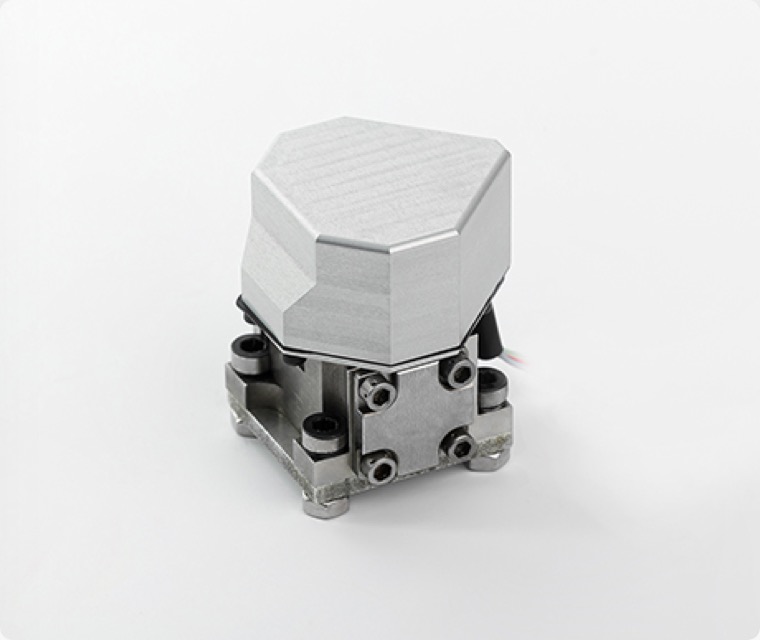 beam detection means, so as to conduct high-precision alignment.
In the future, with the continuous advancement of Moore’s Law, lithography positioning technology will also face greater challenges. For example, the application of multiple exposures, directional self-assembly (DSA) and new metrology technology will further promote the development of nano-positioning in the direction of higher precision and efficiency.
To sum up, nano-scale positioning technology plays an indispensable role in semiconductor lithography. It not only determines the integration and performance of the chip, but also is one of the key technologies to promote the continuous development of semiconductor technology.