
With the rapid development of Industry 4.0 and intelligent manufacturing, Digital Twin technology is gradually becoming an important tool to promote the digital transformation of manufacturing industry. Digital twinning realizes the design, monitoring, prediction and optimization of the real system by constructing the mirror image of the physical entity in the virtual space. In this process, how to realize the control synchronization between digital twins and physical entities is the key problem to ensure the efficient operation and real-time response of the system.
First, the meaning of digital twin control synchronization
Digital twin control synchronization refers to the consistent transmission and update of state, data and control instructions between digital twins and physical entities. This includes not only the real-time data collection and feedback of the physical system, but also the control reaction of the digital model to the physical system, forming a closed-loop control system. The core goal of control synchronization is to ensure that the virtual model can accurately reflect the running state of the physical system and respond and adjust to changes in time.
Second, the key technologies to realize control synchronization
1. Internet of Things (IoT) and Edge Computing
Through sensors and Internet of Things devices, the state data of physical objects, such as temperature, pressure, position, speed and other information, are collected in real time. Edge computing is used for preliminary processing near the data source to reduce data delay and improve response speed.
2. High-speed communication network
High-speed communication technologies such as 5G and industrial Ethernet ensure low-latency and high-bandwidth data transmission between physical system and digital twins, which is an important basis for realizing rapid synchronization of control instructions.
3. Simulation and modeling technology
High-precision modeling is the core of digital twins, and a virtual model that is highly consistent with the actual system is constructed through physical modeling or data-driven modeling. The model needs to have the ability of real-time updating and dynamic adjustment to adapt to the operational changes of the physical system.
4. Control system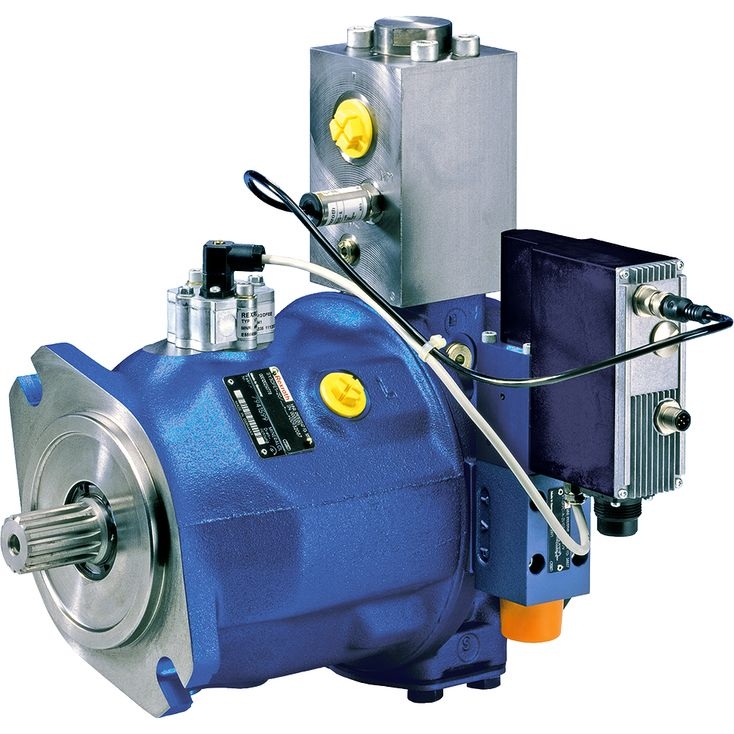 integration
Digital twinning not only reflects the system state, but also needs to be connected with the actual control system (such as PLC and DCS) to realize the transmission of two-way control instructions. For example, when digital twins discover potential faults, early warning or control instructions can be sent to the physical system to intervene.
5. Artificial Intelligence and Predictive Control
With the help of machine learning, deep learning and other technologies, digital twinning can predict the future state of the system and make optimal control decisions, so as to adjust the operating parameters of the physical system in advance and realize more efficient synchronous control.
Third, the application example of control synchronization
In smart factories, digital twinning is widely used for synchronous control of production lines. For example, robots, conveyor belts and inspection equipment on an assembly line can all establish corresponding twins in digital space. Through continuous data collection and status update, managers can monitor equipment operation in virtual environment, predict possible fault points, and adjust equipment operation speed or parameter settings through control instructions, thus avoiding the risk of downtime in actual production.
In addition, in smart cities, energy systems, medical equipment and other fields, digital twins are gradually realizing the leap from “visual monitoring” to “closed-loop control” and truly becoming an important supporting platform for intelligent decision-making and automatic control.
IV. Challenges and Prospects
Although digital twinning technology has made remarkable progress in controlling synchronization, it still faces many challenges, such as data security, system delay, modeling accuracy, multi-source heterogeneous data fusion and so on. In the future, with the integration of emerging technologies such as artificial intelligence, quantum computing and blockchain, digital twins will develop in a smarter, more accurate and more autonomous direction.
In a word, it is not only the inevitable trend of intelligent manufacturing development, but also the key path to construct closed-loop control of intelligent system to realize digital twinning and control synchronization between physical entities. By constantly optimizing the synchronization mechanism and technical means, digital twinning will play an increasingly important role in the digitalization process of industry and society.