
In the world of high-performance motion control, where immense power must be governed with microscopic precision, few components are as critical as the electrical servo valve. Acting as the sophisticated interface between electronic control systems and powerful hydraulic actuators, servo valves are the true nerve centers that translate a tiny electrical signal into precise, high-power mechanical movement.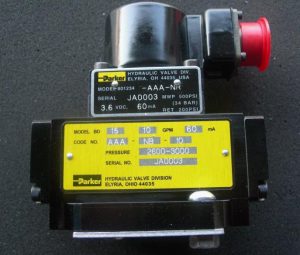
What is an Electrical Servo Valve?
An electrical servo valve is a high-precision, electro-hydraulic device that modulates the flow and direction of hydraulic fluid to an actuator (like a cylinder or motor) in direct proportion to a low-power electrical input signal. Unlike simple on/off solenoid valves, servo valves operate continuously across their entire range, enabling exquisite control over position, velocity, speed, and force.
How Does It Work? The Magic of Precision
The operation of a servo valve is a masterpiece of mechanical and electrical engineering, typically involving two stages:
- 1.The First Stage: Electrical to Mechanical Force (The Torque Motor)
- •The process begins with a low-current electrical signal (typically ±10 mA or ±10 V) from a motion controller.
- •This signal is fed into a torque motor, which generates a precise proportional magnetic force.
- 2.The Second Stage: Mechanical Force to Hydraulic Power (The Flapper Nozzle & Spool)
- •The tiny force from the torque motor moves a component called a flapper positioned between two nozzles. This movement creates a differential pressure at each end of a main spool valve.
- •This pressure difference shifts the spool, which is the key element that opens and closes ports to control the flow of high-pressure hydraulic oil to the actuator.
- •The precise alignment of the spool directly dictates the speed and direction of the actuator. Many valves also incorporate mechanical or electrical feedback to ensure the spool’s position perfectly matches the commanded input signal, achieving exceptional accuracy and stability.
Key Characteristics and Advantages
- •High Precision and Resolution: Capable of responding to the smallest changes in the input signal.
- •High Frequency Response: They can operate at very high speeds (frequencies up to hundreds of Hz), making them ideal for dynamic, rapid-motion applications.
- •High Power Gain: They amplify a tiny electrical signal (milliwatts) to control a huge hydraulic power output (kilowatts).
- •Closed-Loop Control Compatibility: They are the essential component in closed-loop hydraulic systems, where a sensor provides feedback on the output (e.g., cylinder position), allowing for extremely accurate and corrective control.
Critical Applications
The unique capabilities of servo valves make them indispensable in industries where performance is non-negotiable:
- •Aerospace: Flight control systems for actuating wing flaps, rudders, and thrust vectoring nozzles.
- •Industrial Automation: Controlling robotic arms, injection molding machines, and steel rolling mills.
- •Test and Simulation: Used in fatigue testers, flight simulators, and earthquake tables for precise, dynamic loading.
- •Military: Governing the movement of gun turrets, radar antennae, and steering mechanisms for large vehicles.
- •Medical: Found in high-end diagnostic equipment and simulator platforms that require smooth, precise motion.
Servo Valves vs. Proportional Valves
While similar, servo valves are the premium option. They offer higher precision, faster response times, and better performance than standard proportional valves. Proportional valves are often used for less demanding applications where some margin of error is acceptable, while servo valves are specified for the most critical, high-performance tasks.
The Future: Electronics and Integration
The future of servo valves is increasingly digital and integrated. Modern trends include:
- •Onboard Electronics (OBE): Valves with integrated digital controllers for easier setup, diagnostics, and communication via fieldbus networks (e.g., CANopen, EtherCAT).
- •Linear Force Motors: A newer technology that replaces the torque motor and flapper nozzle with a direct-drive linear motor, offering reduced contamination sensitivity and higher reliability.
- •IoT Connectivity: Valves becoming data points, providing real-time feedback on system health and performance for predictive maintenance.
Conclusion
The electrical servo valve remains a pinnacle of electro-hydraulic engineering. It is a component that exemplifies the seamless marriage of electronic intelligence with hydraulic brute force. As automation demands ever-greater levels of speed, power, and accuracy, the servo valve will continue to evolve, solidifying its role as the indispensable precision nerve center for the most demanding applications in the world.