
In modern industrial automation system, servo valve, as the core component of hydraulic control system, is widely used in precision machinery, robotics, aerospace and other fields. With the increasing attention to energy efficiency and environmental protection in the world, how to realize energy saving on the premise of ensuring control accuracy and response speed has become an important direction of servo valve technology development. As a new energy-saving control element, low-pressure servo valve is gradually attracting industry attention. This paper will discuss how the low-pressure servo valve can help realize the energy-saving goal from the aspects of structural design, working principle and application practice.
First, the basic characteristics of low-pressure servo valve
Low-pressure servo valve usually refers to the servo valve whose working pressure is below 10MPa. Compared with the traditional high-pressure servo valve, it has lower energy consumption, smaller volume and higher safety performance. By optimizing the electromagnetic drive structure and flow passage design, the low-pressure servo valve can reduce the energy loss in the hydraulic system on the premise of ensuring the control accuracy.
Second, the energy-saving principle of low-pressure servo valve
1. Reduce the driving power requirements
The working pressure of low-pressure servo valve is low, which reduces the driving power required by hydraulic pump. Under the same flow demand, lower pressure means less power consumption, thus effectively reducing the overall energy consumption of the system.
2. Reduce throttling loss
In the traditional high-pressure system, in order to meet the control accuracy, it is often necessary to achieve flow control through throttling adjustment, resulting in greater energy loss. Through more accurate opening control and advanced control algorithm, the low-pressure servo valve can realize more efficient energy utilization and reduce unnecessary throttling loss.
3. Improve response efficiency
Under the condition of low pressure, the compressibility and leakage of hydraulic oil are relatively small, which makes the servo valve respond faster and control more stable. This efficient response mechanism not only improves the system performance, but also indirectly realizes the energy-saving effect.
Third, the technical means of energy-saving design
1. Optimize the electromagnetic drive module
High-efficiency electromagnetic materials and new coil structure are adopted to improve electromagnetic conversion efficiency, thus reducing power loss.
2. Introduce digital control technology (such as digital servo valve).
Digital servo valve realizes precise closed-loop control of spool position through microprocessor, which can dynamically adjust output and avoid energy waste.
3. Use low-friction materials and structural design
Low-friction materials or coatings are used between the valve core and the valve body to reduce the mechanical friction loss and improve the overall energy efficiency.
4. Integrated energy-saving hydraulic system
Low-pressure servo valves are often used in conjunction with energy-saving hydraulic pump stations, accumulators and other components to build a closed-loop or load-sensitive system to realize pressure and flow supply as needed, and further improve energy-saving effect.
Fourth, the practical application case analysis
After replacing the traditional high-pressure servo valve with the low-pressure servo valve in an automatic production line, the energy consumption of the hydraulic system is reduced by about 25%, and the response speed of the system is increased by 10%. This not only prolongs the service life of the equipment, but also significantly reduces the operating cost and carbon emissions, reflecting good economic benefits and environmental protection value.
V. Conclusion
To sum up, the low-pressure servo valve has achieved effective energy-saving effect by reducing working pressure, optimizing control strategy and adopting new materials and technologies. Under the background of the current “double carbon”
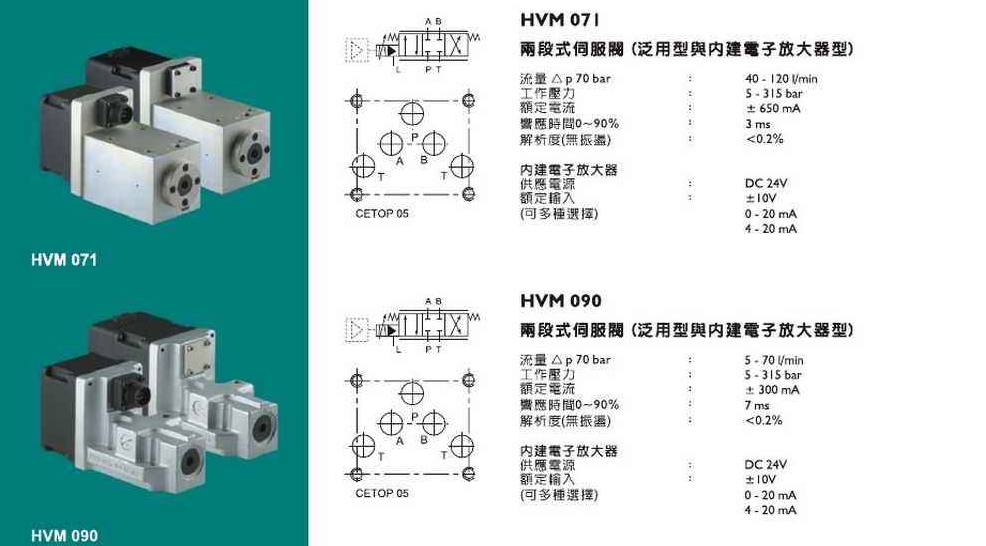 target, the energy-saving advantage of low-pressure servo valve is increasingly prominent, and it will play a key role in more energy-saving and environment-friendly equipment in the future. With the continuous progress and perfection of technology, low-pressure servo valve will surely occupy a more important position in the field of industrial automation.