
Accurate Measurement of Flow Coefficient of Mechanical Regulating Valve
One, Introduction
Regulating valves play a crucial role in the field of industrial automation. Their main function is to control the flow of fluids. The flow coefficient is an important parameter for measuring the performance of regulating valves and a key indicator for measuring the flow characteristics of regulating valves. It is also an important basis for the design and selection of regulating valves. The precise measurement of the flow coefficient of regulating valves is of great significance for the design, selection, installation, and use of regulating valves.
Two, the definition and significance of the flow coefficient of the mechanical regulating valve
The flow coefficient (Cv) is an important parameter for measuring the performance of regulating valves. It is the ratio of the volume of fluid passing through the valve per unit time under specific working conditions to the volume of fluid passing through the valve when the valve is fully open. The size of the flow coefficient directly determines the flow characteristics of the regulating valve in the working state and is an important basis for the design and selection of regulating valves. At the same time, the size of the flow coefficient also affects the installation and use of the regulating valve. If the flow coefficient is too large or too small, it will lead to poor performance of the regulating valve and affect production efficiency.
Three, the measurement methods of the flow coefficient of the mechanical regulating valve
Experimental method: By measuring the flow and pressure under the working conditions of the regulating valve, the flow coefficient of the regulating valve is calculated using the principles of fluid mechanics and thermodynamics. The experimental method needs to be measured multiple times to ensure the accuracy of the data, but the equipment required is relatively complex and the cost is high.
Calculation method: By consulting relevant information, the flow coefficient of the regulating valve is calculated using formulas. This method requires a relatively deep understanding of the working conditions of the regulating valve and an accurate understanding and mastery of the relevant formulas. The calculation process is relatively simple, but due to the inaccuracy of the data, the error of the calculation results may be large.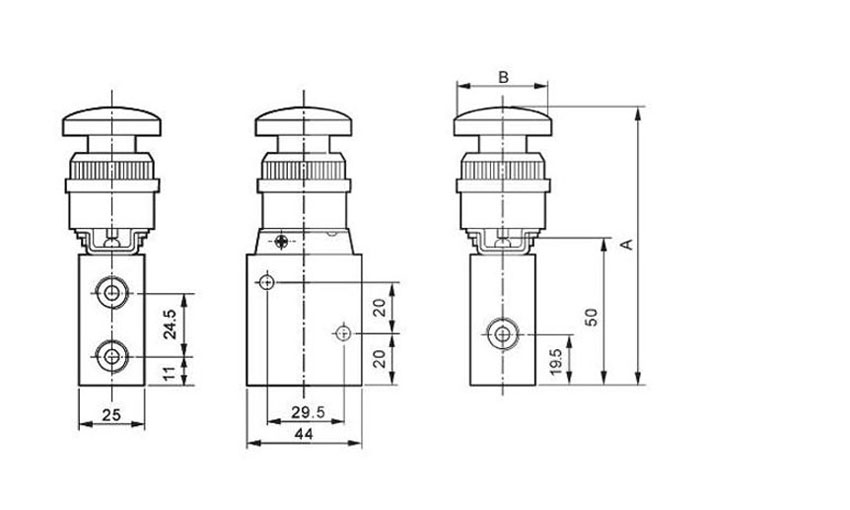
Standard method: By using standard flowmeters and standard pressure gauges, the regulating valve is compared with the standard flowmeter and standard pressure gauge, thereby calculating the flow coefficient of the regulating valve. This method requires the use of standard flowmeters and standard pressure gauges and needs to be measured multiple times to ensure the accuracy of the data.
Four, the measurement steps of the flow coefficient of the mechanical regulating valve
Firstly, it is necessary to determine the working conditions of the regulating valve, including working pressure, working temperature, fluid properties, and so on.
Then, standard flowmeters and standard pressure gauges need to be used to compare the regulating valve with the standard flowmeter and standard pressure gauge, thereby calculating the flow coefficient of the regulating valve.
During the experiment, it is necessary to ensure that the regulating valve is in the fully open state to ensure the accuracy of the experimental results.
After the experiment is completed, the data needs to be organized and analyzed to ensure the accuracy and reliability of the data.
Five, Conclusion
The measurement of the flow coefficient of the mechanical regulating valve is of great significance for the design, selection, installation, and use of regulating valves. Through the experimental method, calculation method, and standard method, the flow coefficient of the regulating valve can be accurately measured, thus providing a basis for the performance optimization of the regulating valve. At the same time, attention should also be paid to the possible problems that may occur during the measurement process to ensure the accuracy of the measurement results.