
First, the basic concept of trajectory control
Trajectory control not only involves the geometric shape of the path (such as straight lines and curves), but also includes the variation law of speed and acceleration in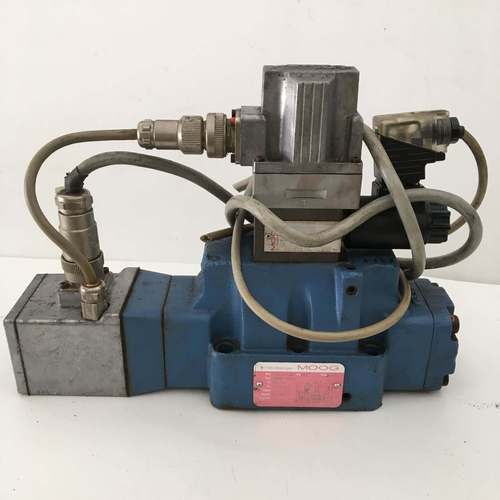 the time dimension. Therefore, trajectory control planning usually includes two aspects: Path Planning and Time Scaling. Path planning mainly solves the problem of “where to go”, while time planning solves the problem of “how to go”
Second, the main steps of trajectory planning
1. Task modeling and environment modeling
Before trajectory planning, it is necessary to model the mission objectives, environmental constraints and system models. For example, the degree of freedom, the maximum speed and the maximum acceleration limit of the robot are all key factors that affect the feasibility of the trajectory.
2. Path generation
The goal of path generation is to find a safe path from the starting point to the end point. Commonly used methods include A* algorithm, Dijkstra algorithm, RRT (Fast Extended Random Tree) and artificial potential field method. The path should try to avoid obstacles and meet the smoothness requirements.
3. Trajectory optimization
After the path is generated, it needs to be converted into a trajectory with time parameters. This step usually takes into account the dynamic and kinematic constraints of the system, such as minimizing jerk, minimizing energy consumption or optimizing time. Commonly used trajectory optimization methods include polynomial interpolation (such as cubic spline curve), B spline, Bezier curve and so on.
4. Trajectory tracking and feedback adjustment
Even if the ideal trajectory is planned, it may still be disturbed in the actual implementation process, so it is necessary to track and adjust the trajectory in real time through closed-loop control (such as PID controller and model predictive control MPC) to ensure the motion accuracy of the system.
Third, the key technology of trajectory control
-Interpolation and fitting technology: used to generate smooth continuous trajectories between discrete points.
-Kinematics and dynamics modeling: An accurate model is the basis of trajectory planning.
-Real-time and computational efficiency: especially important in autonomous driving or high-speed robots.
-Security and obstacle avoidance mechanism: especially in complex dynamic environment.
Fourth, the application scenario
Trajectory control is widely used in many fields:
-Used in industrial robots to perform tasks such as welding, handling and assembly;
-used for vehicle path planning and obstacle avoidance in unmanned driving;
-Autonomous navigation and formation flying in unmanned aerial vehicles;
-Ensure machining accuracy in CNC machine tools.
V. Conclusion
With the development of artificial intelligence and control theory, trajectory control is developing towards higher precision, stronger adaptive ability and better real-time performance. In the future, with the integration of 5G, edge computing and deep learning, the trajectory control system will be more intelligent, which can realize real-time and efficient planning in a complex and dynamic environment and provide strong support for intelligent manufacturing and intelligent transportation.