
First, the basic principle of CFD in servo valve analysis
CFD is a technique to simulate the characteristics of flow field by solving fluid control equations (such as Navier-Stokes equations) by numerical methods. In the servo valve, CFD is mainly used to analyze the flow characteristics of the internal passage, such as pressure distribution, velocity field, vortex region, flow gain, pressure drop loss and so on. Through the simulation of these parameters, the dynamic response and steady-state characteristics of the servo valve can be predicted.
Second, the key steps of CFD modeling of servo valve
1. Geometric modeling and meshing.
Establishing an accurate three-dimensional geometric model is the basis of CFD analysis. The servo valve is complex in structure, including tiny gap structures such as valve core, valve sleeve and throttle, so it is necessary to adopt fine modeling technology. Subsequently, structured or unstructured grids are used for division, especially for local encryption in areas with severe flow field changes (such as choke) to improve the calculation accuracy.
2. Boundary condition setting
According to the actual working conditions, the inlet pressure, outlet back pressure, wall conditions and spool motion parameters are set. Servo valves usually involve transient flow, so it is necessary to consider the influence of the motion law of the spool on the flow field.
3. Physical model selection
Select appropriate turbulence model (such as k-ε model and k-ω SST model), multiphase flow model (such as cavitation) and transient solver to accurately capture the flow field characteristics.
Iii. CFD analysis flow of servo valve
CFD analysis generally includes the following steps: pretreatment (modeling and grid division), solution calculation, post-processing and result analysis. For servo valve, the influence of valve opening change on flow rate, internal pressure distribution, cavitation or backflow phenomenon are analyzed emphatically. In addition, parametric modeling and DOE (experimental design) method can be used to compare multiple schemes to achieve structural optimization.
Fourth, the application value of CFD analysis in servo valve optimization
1. Improve the design efficiency: The traditional test method has high cost and long cycle, while CFD can quickly evaluate the performance of different structural schemes in the initial stage of design and shorten the development cycle.
2. Optimization of flow performance: By analyzing the influence of throttle shape and valve core structure on the flow field, the flow-pressure characteristic curve is optimized to improve the linearity and response speed of the servo valve.
3. Fault prediction and improvement: identifying abnormal areas of internal flow, such as eddy current, dead zone and high pressure gradient zone, is helpful to prevent cavitation and wear.
V. Conclusion
To sum up, CFD analysis provides a powerful tool for the design and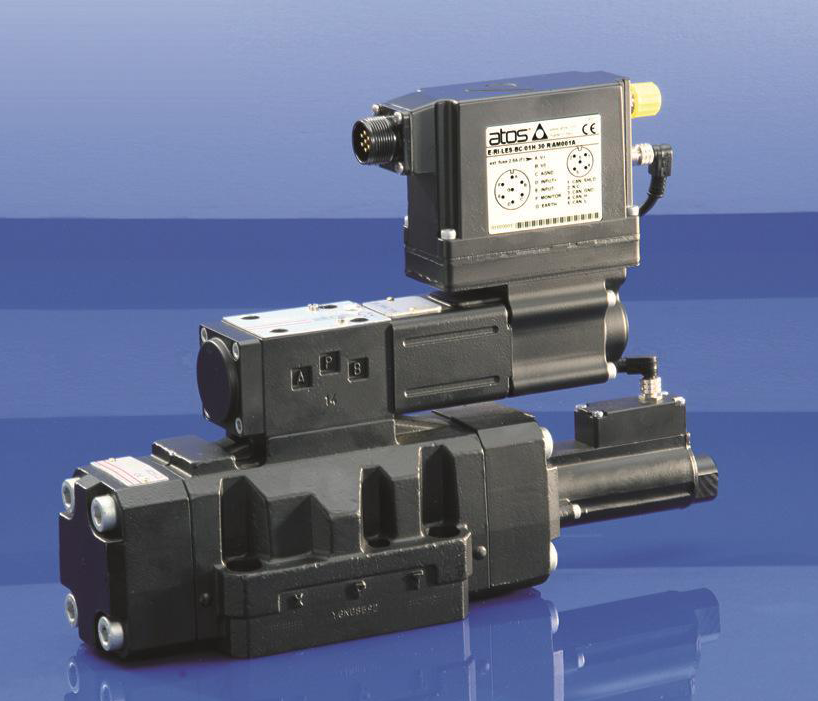 performance optimization of servo valves. Although CFD simulation still needs to be combined with experimental verification to ensure accuracy, its advantages in reducing development costs and accelerating product iteration have become increasingly prominent. In the future, with the development of artificial intelligence combined with CFD, the intelligent design and prediction ability of servo valve will be further improved.
—
If you need more in-depth case analysis or software operation guidance (such as ANSYS Fluent, COMSOL, etc.), you can further discuss it.