
In modern industrial automation system, servo valve is widely used in hydraulic servo control system because of its high responsiveness and high control accuracy. Programmable logic controller (PLC), as the core equipment of automatic control, is often used to realize precise control of servo valve. This paper will discuss the basic principle of servo valve and how to control it through PLC.
First, the working principle of servo valve
Servo valve is a kind of control element that can convert tiny electrical signal into high-power hydraulic output, and is usually used in closed-loop control system. It consists of an electromagnetic part and a hydraulic amplifying part. It controls the flow and direction of hydraulic oil through the input current or voltage signal, so as to drive the actuator (such as hydraulic cylinder or hydraulic motor) to realize accurate position, speed or force control.
Servo valve has the characteristics of fast response, high control accuracy and strong repeatability, so it is widely used in injection molding machines, machine tools, aircraft control systems and other fields.
Second, the basic composition of PLC control system
PLC is a digital operation electronic system specially designed for industrial environment, which has high reliability and strong anti-interference ability. In the servo valve control system, PLC is mainly responsible for receiving input signals from sensors or upper computers, and outputting corresponding control signals to the servo valve after logical judgment and operation.
A typical PLC control system includes the following parts:
1. Input module: used to collect sensor signals such as position, pressure and speed.
2. Central processing unit (CPU): responsible for program execution and data processing.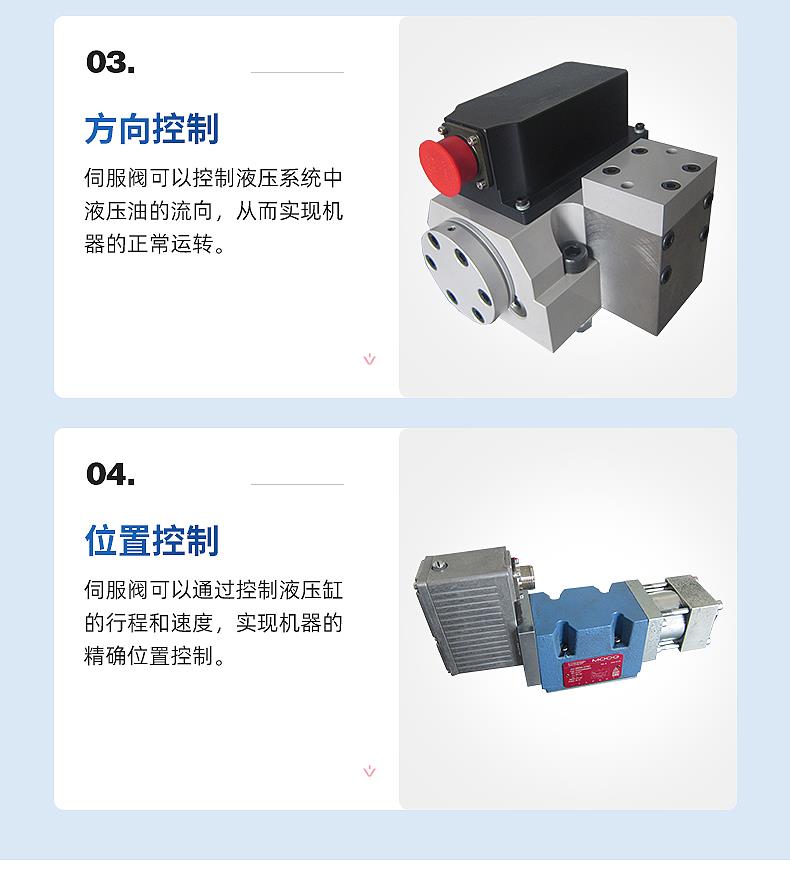
3. Output module: used to output control signals to servo valves or other actuators.
4. Communication module (optional): used to communicate with the host computer, HMI and other equipment.
Third, the realization process of servo valve PLC control
1. Signal acquisition and feedback
In the closed-loop control system, it is necessary to collect real-time information such as the position,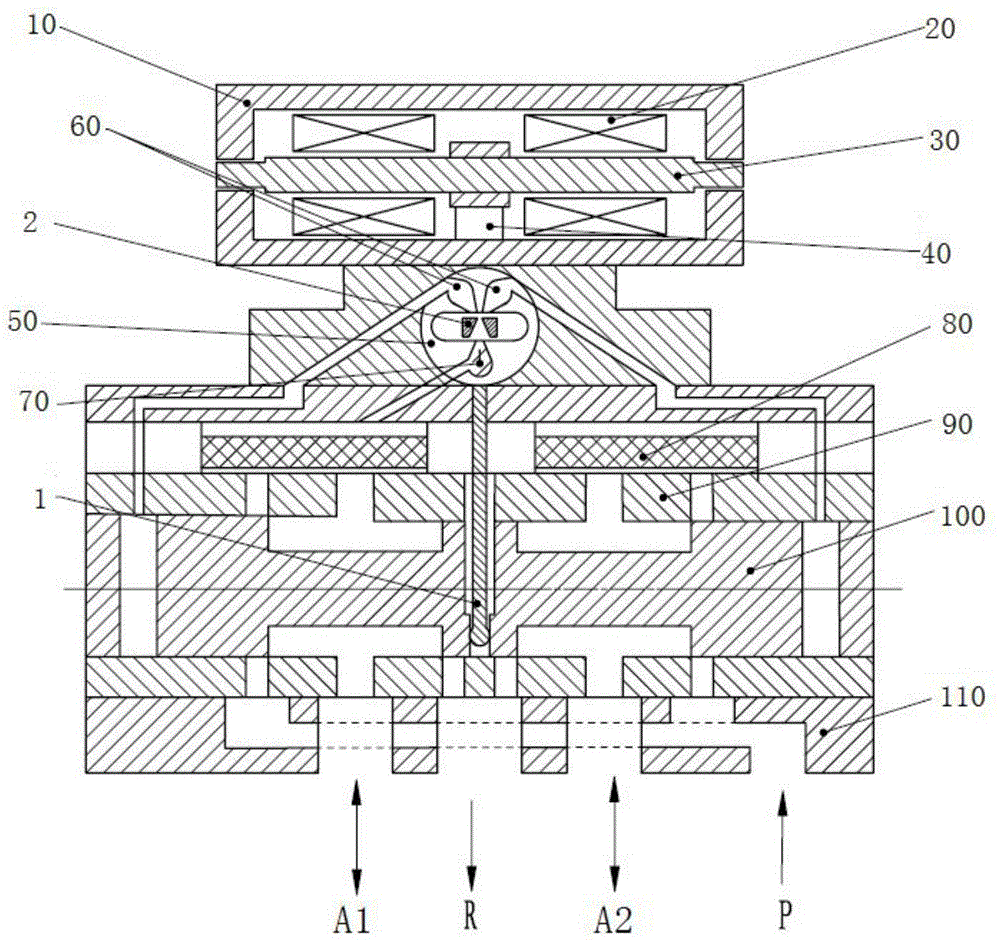 speed or pressure of the actuator through sensors, and send these signals back to PLC as feedback signals. For example, the displacement sensor is used to collect the displacement of hydraulic cylinder, which is converted into voltage or current signal and sent to the analog input module of PLC.
2. Control algorithm processing
According to the deviation between the set target value and the actual feedback value, PLC uses PID control algorithm or other control strategies to calculate the control output value. This output value is usually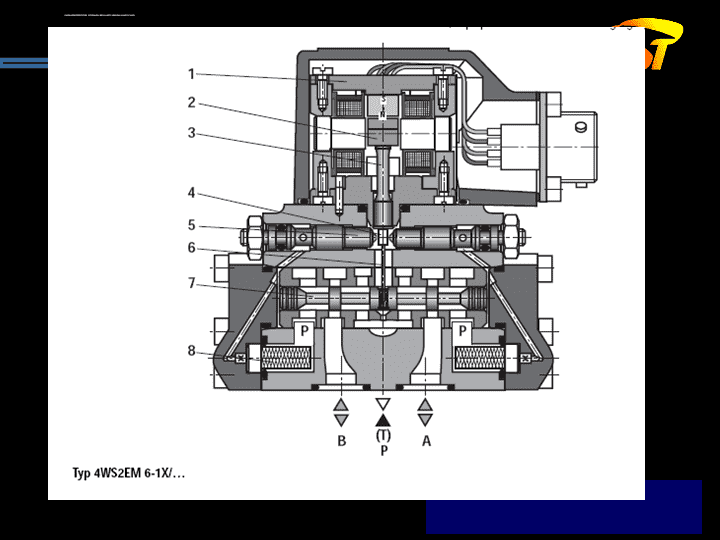 a voltage or current signal, which is used to drive the servo valve to work.
3. Output control signal
PLC sends the calculated control signal to the proportional amplifier of the servo valve through its analog output module, and the amplifier amplifies the signal to drive the servo valve to work, thus adjusting the output of the hydraulic system.
4. System debugging and optimization
In practical application, it is necessary to adjust the PID parameters of PLC to achieve the best control effect. In addition, it is necessary to adjust the parameters such as the gain and dead zone of the servo valve according to the dynamic response of the system to ensure the stable operation and fast response of the whole system.
Fourth, application examples
Take the hydraulic servo control system to control the hydraulic cylinder as an example: PLC calculates the control signal through PID algorithm according to the set position target and outputs it to the servo valve; The servo valve adjusts the flow and direction of hydraulic oil according to the signal, thus controlling the movement of the hydraulic cylinder; The position of hydraulic cylinder is detected by displacement sensor and fed back to PLC to form closed-loop control and realize accurate positioning.
V. Conclusion
With the continuous improvement of industrial automation level, the combination of PLC and servo valve provides a strong guarantee for high precision and high efficiency hydraulic control system. Through PLC programming control of servo valve, not only the automation degree of the system is improved, but also the flexibility and reliability of the system are enhanced. In the future, with the development of industrial internet and intelligent control technology, servo valve PLC control system will play a more important role in the field of intelligent manufacturing.